
Barndominium builders across the Highland Lakes and the Austin side
Tell us your county and what you want to build. Your request goes to one independent builder, not to a national lead list. The permit, septic, lake and aquifer rules for all six counties are here for when you need them.
Free. No obligation. No fee to you at any point.
Four fields, no email
Get a free estimate for your build
Your county and what you want to build. Free. No obligation. No fee to you at any point.
Tell us where the land is and what you want to build: the pad, the septic, the shell, the finish. Your request goes to one independent builder, and taking the project is their call.
Step one
Send your county and your plan.
Four fields, no email needed. Not sure what you want to build yet is a fine answer.
Step two
One independent builder receives your request.
One company receives your details and what you wrote, not a national lead list. Taking the project is their call. Who they are is on the about page.
Step three
Plan and price in writing, then the build.
Free and with no obligation. Say the word and the septic, the pad, the shell and the finish get scheduled.
What a builder can put on your lot
Full turnkey barndominiums, post-frame homes on a slab, steel-frame shop houses, and shells an owner finishes over time. Pick the one closest to your plan, or let the builder help you choose.
Why does the county decide more here than the builder does?
Because Texas licenses no home builder and no general contractor, and it leaves most residential building rules outside city limits to each county. One county on this site permits every structure on unincorporated land and requires third-party inspections. Others list no building department at all and regulate a homesite through septic, floodplain and driveway permits instead. The same plan can need plan review in one county and a septic permit and a culvert permit in the next one over.
A second authority sits on top of the county map. Around the Highland Lakes the Lower Colorado River Authority regulates septic systems inside a zone measured out from the water, and inside that zone it permits the system whatever the lot size and whatever the county would have done. Finding out which office holds your parcel is the first call on a lake lot. Each county page carries that county's own answer with the source and the date, and the chain at the top of every page shows all six at once.
Source: Office of the Texas Governor, Business Permit Office, Texas Business Licenses and Permits Guide, read 2026-09-13.
Source: LCRA On-Site Sewage Facilities Program, read 2026-09-13.
Source: LCRA On-Site Sewage Facilities Rules, Section 10.05(b), read 2026-09-13.
What is the ground like out here?
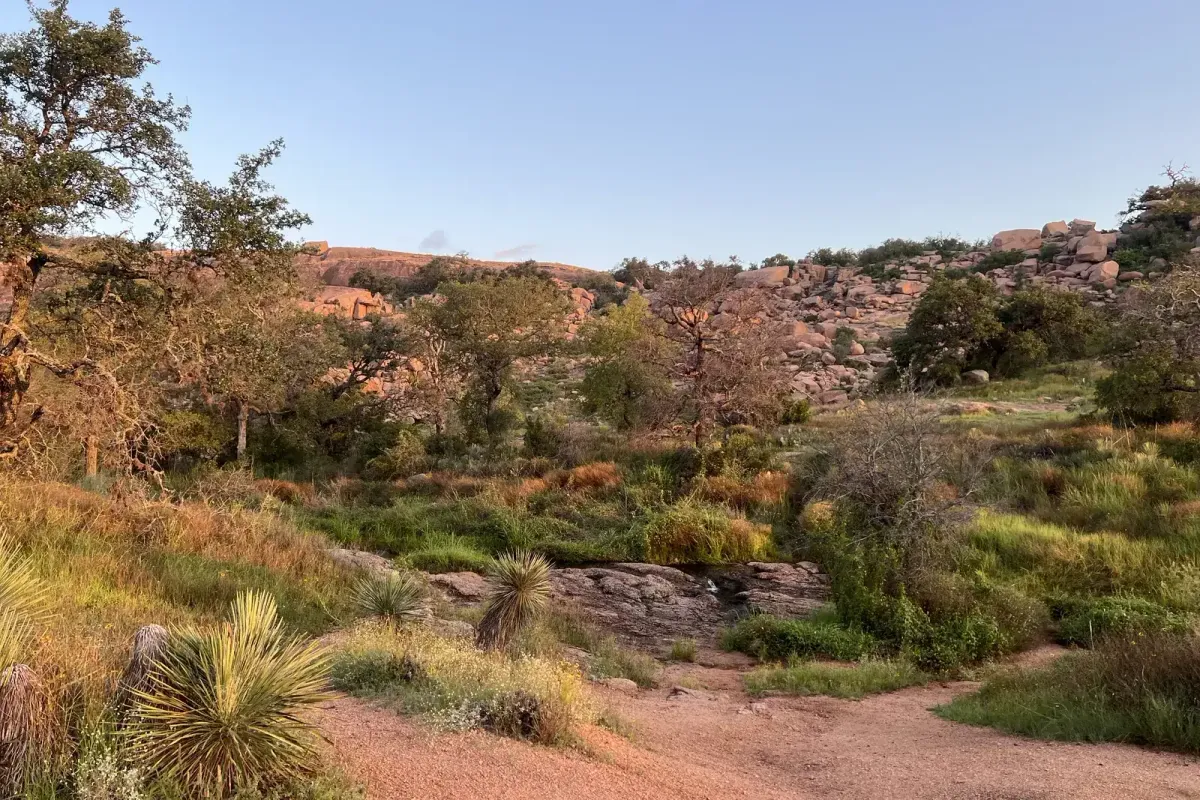
Three kinds, and they change the build. West, in Llano and Burnet counties, the Llano Uplift puts pink granite and gneiss at or near the surface: rock in the trench for the septic, rock under the pad, and the same rock that makes the lake shorelines what they are. In the middle, western Travis and Williamson sit on the limestone of the Balcones Escarpment, thin soil over rock with the aquifer underneath. East, toward Bastrop and Lockhart, the Blackland Prairie clay shrinks and swells with the seasons and asks a slab to be engineered for it, and the Lost Pines around Bastrop sit on deep sand.
What the ground does not change is the process: a soil evaluation on the specific building site decides the septic system, and the slab is engineered for what is under it. The lot guide walks through it county by county.
The four things you can check before you sign
The county is the permitting authority on most lots. Near the lakes it may be the river authority instead. The soil evaluation comes first either way.
Whether your county permits and inspects a house at all, per that county's own site, with the date we read it.
The Colorado River and its creeks put a floodplain permit in play in every one of the six counties, and each county names its own floodplain administrator.
Construction-to-permanent loans and the appraisal question are where barndominium projects stall. Named programs, agency links, no figures.
Building here, in more detail
In what order do the county permits come on an unbuilt lot?
The order is not the same in all six counties, and running it backwards costs weeks.
Burnet County fixes it: the 911 address first, then the building permit, then the septic permit, and the county will not process an incomplete packet or issue the septic permit without the building permit. Your precinct commissioner has to approve the driveway on a county road access permit before the 911 address is assigned. Williamson County issues no building permit at all. What comes first there is a Certificate of Compliance from the County Engineer, which is the floodplain check, and the septic application will not be processed until that is done. A lot in a recorded subdivision may already carry one in its plat notes.
Bastrop County takes the development permit and the septic permit at the same time where there is no public sewer, with the driveway and the 911 address on the same application. Caldwell County will not issue its Residential Construction Permit until the paperwork around the lot is in: recorded plat or metes and bounds survey, deed, tax certificates showing taxes paid, a sketch of the structure, the approved 911 address, and the approved county septic permit. Travis County permits almost everything as development, structures, driveways, septic systems, land division, grading and clearing included. Llano County asks for seven to 10 business days on a review outside the floodplain and longer inside it.
Statewide, the septic permitting authority has 30 days from receipt to approve or deny your planning materials and application, in writing if it denies. Start the permit question and the septic question on the day the lot goes under contract. The long version of all of it is in building a barndominium in Central Texas.
Source: TCEQ, Getting a Permit for an On-Site Sewage Facility, read 2026-09-13.
Source: Burnet County On-Site Sewage Facilities and Development Services, read 2026-09-13.
Source: Williamson County frequently asked questions, County Engineer, read 2026-09-13.
Source: Bastrop County Development Services, read 2026-09-13.
Source: Caldwell County Development Ordinance, revised February 14, 2023, read 2026-09-13.
Source: Travis County Transportation and Natural Resources, Development Services, read 2026-09-13.
Source: Llano County Development Services, read 2026-09-13.
What do you ask an independent builder when no one holds a state builder license?
The Texas Residential Construction Commission was abolished when its enabling Act expired on September 1, 2009, and no state roster replaced it, though local city or county requirements may still apply. These four questions do the work a license would. Write the answers down.
The trades under the builder are different. Septic installers, electricians and plumbers all hold state credentials you can check yourself on the agency's own public license search. What you are buying, a shell or a finished house, is a separate conversation: see shells versus turnkey, post-frame homes and metal building homes.
Which inspections will you contract, and who performs them? In Travis and Bastrop counties three are required on a new house: foundation before the concrete is placed, framing and mechanical before drywall, and completion. The builder contracts them, not the county, and the inspector has to be one of six listed qualified persons.
Who is the septic installer and what is the license number? Every OSSF installer, apprentice, maintenance provider and maintenance technician in Texas is licensed or registered by TCEQ, Installer I for standard systems and Installer II for all types, and TCEQ runs a public lookup.
Who is the electrician and who is the plumber? Electricians are licensed through TDLR and non-exempt electrical work goes through a licensed electrical contractor. Plumbers are licensed by the Texas State Board of Plumbing Examiners. Both agencies publish a license search.
Which county office issues each permit on my lot, and who files the applications, you or me?
Source: Texas Sunset Advisory Commission, read 2026-09-13.
Source: Office of the Texas Governor, Business Permit Office, Texas Business Licenses and Permits Guide, read 2026-09-13.
Source: Texas Local Government Code Sec. 233.154(a)(1), read 2026-09-13.
Source: Texas Local Government Code Sec. 233.154(a)(3), read 2026-09-13.
Source: TCEQ, Occupational Licenses: On-Site Sewage Facilities (Septic Systems), read 2026-09-13.
Source: TCEQ, On-site Sewage Facilities: Information for Regulators, read 2026-09-13.
Source: Texas Department of Licensing and Regulation, Electricians program, read 2026-09-13.
Source: Texas Department of Licensing and Regulation, read 2026-09-13.
Source: Texas State Board of Plumbing Examiners, read 2026-09-13.
Source: Texas State Board of Plumbing Examiners, read 2026-09-13.
Source: Travis County Transportation and Natural Resources, Development Services, read 2026-09-13.
Source: Bastrop County Development Services, read 2026-09-13.
What does the contract have to carry where nobody inspects the house?
Three of the six inspect no house at all. Llano County runs no building department, no building code and no building inspector; what it issues is a development permit, which is also how the property gets its 911 address. Caldwell County's Residential Construction Permit is not a building code permit, and the county does not inspect framing or electrical work. Williamson County has adopted no residential building code for the unincorporated county and issues no certificate of occupancy.
Burnet is the fourth, and there it turns on the flood map. A Class A permit, outside any flood hazard area, is application and payment only with no county inspection of the structure. A Class B permit, inside a designated flood hazard boundary, needs an elevation certificate from a surveyor or a letter from an engineer, a site plan showing the flood zone, and two inspections, pre-pour and finished construction.
So where the county checks nothing, the contract is the inspection. Name in it: the code edition by year, the way a Travis County application has to, since Bastrop's Commissioners Court set its standard by resolution on September 14, 2009 and Williamson has adopted none; who contracts and pays for inspections at foundation, framing and mechanical, and completion; whose name goes on the septic permit and which licensed installer builds the system; and who produces the elevation certificate where Burnet's Class B permit or Caldwell's two-foot finished floor rule calls for one. An owner-builder building their own primary residence, or acting as their own contractor on it, is not penalized for failing to give the statutory notices, but that is an exemption from a penalty, not protection. Those rules sit on the Burnet County and Caldwell County pages.
Source: Texas Local Government Code Sec. 233.157(c), read 2026-09-13.
Source: FEMA, Elevation Certificate FAQ, October 2023, read 2026-09-13.
Source: Texas Local Government Code Sec. 233.154(a)(1), read 2026-09-13.
Source: Texas Local Government Code Sec. 233.154(a)(3), read 2026-09-13.
Source: Llano County Development Services, read 2026-09-13.
Source: Caldwell County Development Ordinance, revised February 14, 2023, read 2026-09-13.
Source: Williamson County frequently asked questions, County Engineer, read 2026-09-13.
Source: Burnet County On-Site Sewage Facilities and Development Services, read 2026-09-13.
Source: Travis County Transportation and Natural Resources, Development Services, read 2026-09-13.
Source: Bastrop County Development Services, read 2026-09-13.
Why do two lots on the same road cost different amounts to build on?
Same road, same acreage, different cost to build, and the difference is usually underground or on a map.
Septic is the first split, and the county sets the minimum lot size, not the state. Travis County states no lot-size exemption of its own and sets one acre as the minimum for a home on a septic system. Bastrop County's minimum is half an acre with a public water supply and one acre without. Caldwell County's is one acre, and only a licensed installer may build the system there. The state's ten-acre exemption under 30 TAC 285.3 exists, but Burnet, Bastrop and Caldwell each permit every system regardless of acreage.
The Edwards Aquifer is the second, and among the six it reaches only Travis and Williamson. On the recharge zone there is no acreage floor: every regulated activity needs an approved Water Pollution Abatement Plan before construction starts. On the contributing zone the trigger is five acres of disturbance or being part of a larger plan of development or sale, and a site sitting partly on each is treated as recharge zone. So check the parcel on the TCEQ Edwards Aquifer Map Viewer before you make an offer, and read the contributing zone guide.
Floodplain freeboard is the third, and the number changes at the county line: one foot above base flood elevation in Burnet with two recommended in an A zone, two feet in Bastrop, a first finished floor two feet above the adjoining base flood elevation in Caldwell for a home inside or within 300 feet of a floodplain, and in Williamson a foot above base flood elevation with a FEMA elevation certificate filed after the slab and again at completion. What any of this costs is on the cost guide. Start with land and lot evaluation.
Source: TCEQ adopted rule text, 30 TAC Chapter 285, Rule Project No. 2021-030-285-CE, section 285.3, read 2026-09-13.
Source: TCEQ, Getting a Permit for an On-Site Sewage Facility, read 2026-09-13.
Source: TCEQ GIS metadata, Edwards Aquifer Recharge Zone - Chapter 213 Rules (TSMS), quoting 30 TAC 213.3(8), read 2026-09-13.
Source: TCEQ, Water Pollution Abatement Plan page, read 2026-09-13.
Source: TCEQ, What Plans You Might Need, recharge zone branch, read 2026-09-13.
Source: TCEQ, Edwards Aquifer Protection Program: What Plans You Might Need, read 2026-09-13.
Source: TCEQ, What Plans You Might Need, contributing zone branch, read 2026-09-13.
Source: TCEQ, Edwards Aquifer Map Viewer page, read 2026-09-13.
Source: FEMA 467-1, Floodplain Management Bulletin: Elevation Certificate, read 2026-09-13.
Source: Travis County Transportation and Natural Resources, Development Services, read 2026-09-13.
Source: Bastrop County Development Services, read 2026-09-13.
Source: Caldwell County Development Ordinance, revised February 14, 2023, read 2026-09-13.
Source: Burnet County On-Site Sewage Facilities and Development Services, read 2026-09-13.
Source: Williamson County frequently asked questions, County Engineer, read 2026-09-13.
What is the one question that changes everything on a lake lot?
Is the lot inside LCRA's on-site sewage jurisdiction? Ask that before anything else.
TCEQ made LCRA an authorized agent for the state's on-site sewage facility rules inside LCRA's jurisdiction. That jurisdiction runs 2,200 feet around the upper Highland Lakes, meaning Buchanan, Inks, LBJ and Marble Falls, and 2,000 feet around Lake Travis. It is built from two layers: a Restricted Zone at each lake, plus a Water Quality Zone extending 2,000 feet horizontally beyond that Restricted Zone's outer boundary. LCRA is an authorized agent in Travis, Burnet and Llano counties and appears in none of the other three.
Inside that line, four things follow. A permit is required before any system is constructed or installed, whatever the lot size. Allow up to 30 days from the application date for a new system permit. An aerobic treatment unit needs a maintenance contract for its first two years, after which the owner may do the maintenance only after taking the class and passing the test. And an inspection is required on every transfer of ownership before LCRA approves the new owner for continued use, which catches buyers of an existing lake house.
One conflict is on the record and not resolved: LCRA's own pages put the Lake Travis zone at 2,000 feet, Travis County is reported to say 1,000 feet, and nothing on LCRA's site checked for this page says 1,000. Check your address on LCRA's searchable OSSF and watershed jurisdiction map, then call the office the map returns. Above the Regulated Pool Elevation a second rulebook applies: the Highland Lakes Watershed Ordinance governs clearing, excavating, grading and building in the Lake Travis watershed in Travis County, the Colorado River watershed in Burnet County and part of Llano County. A single-family residence creating under 10,000 square feet of impervious cover and disturbing under one acre can file a written notification instead of a permit, and eleven local governments administer part or all of that ordinance, so an LCRA permit may not be the one that applies to you. Work through will my Highland Lakes lot work next.
Source: LCRA On-Site Sewage Facilities Program, read 2026-09-13.
Source: TCEQ OARS county search, identical entry returned for Travis, Burnet and Llano counties, read 2026-09-13.
Source: LCRA On-Site Sewage Facilities Rules, Section 6, Area of Jurisdiction, read 2026-09-13.
Source: LCRA On-Site Sewage Facilities Rules, Section 10.05(b), read 2026-09-13.
Source: LCRA On-site Sewage Rules Frequently Asked Questions, read 2026-09-13.
Source: LCRA Water Quality Jurisdictions map, read 2026-09-13.
Source: LCRA Highland Lakes Watershed Ordinance, Section 1, Title and Scope, read 2026-09-13.
Source: LCRA Highland Lakes Watershed Ordinance program page, read 2026-09-13.
Source: LCRA Highland Lakes Watershed Ordinance, Section 4.1(b), Written Notification, read 2026-09-13.
Source: LCRA Highland Lakes Watershed Ordinance program page, Interlocal agreements, read 2026-09-13.
Source: Travis County Transportation and Natural Resources, Development Services, read 2026-09-13.
Source: Burnet County On-Site Sewage Facilities and Development Services, read 2026-09-13.
Source: Llano County Development Services, read 2026-09-13.
How is financing a build different from buying a finished house?
Two things change: you borrow in stages, and the appraiser has less to work with.
Fannie Mae's Selling Guide recognizes single-closing construction-to-permanent financing, where the construction loan and the permanent mortgage close together and the construction loan converts automatically when building is finished. Texas Farm Credit states that it finances barndominiums and offers construction and homesite loans covering homes under construction and the homesite itself. Capital Farm Credit says it finances barndominiums and metal homes under its construction lending, and offers homesite loans for buying the lot with building deferred. The Veterans Land Board publishes exactly two loan programs for Veterans, Land Loans and Home Loans. USDA Rural Development runs two Section 502 programs in eligible rural areas, one lending directly to lower-income applicants and one backing approved lenders, with a property eligibility map you can check by address. Where a county adopts no residential building code, as Williamson has not, your lender's requirements may be the only outside standard on the job.
On the appraisal side, an appraiser selects comparable sales that match your property's physical and legal characteristics, because sales in the same area are the best indicator of value. Where few truly comparable sales exist, either because the improvements are unusual or because the neighborhood has few sales, the appraiser may use properties that are not truly comparable, as long as the analysis is documented and explained. What an appraiser may not do is manufacture a comparable by adding a vacant land sale to the contract price of a home. Ask your lender in writing, before you sign a build contract, how the appraisal will be handled and what happens if it comes in short. The detail is in financing and the appraisal gap.
Source: Fannie Mae Selling Guide, read 2026-09-13.
Source: Texas Farm Credit, read 2026-09-13.
Source: Texas Farm Credit, read 2026-09-13.
Source: Capital Farm Credit, read 2026-09-13.
Source: Capital Farm Credit, read 2026-09-13.
Source: Texas Veterans Land Board, Texas General Land Office, read 2026-09-13.
Source: USDA Rural Development, read 2026-09-13.
Source: USDA Rural Development, read 2026-09-13.
Source: Fannie Mae Selling Guide, read 2026-09-13.
Source: Williamson County frequently asked questions, County Engineer, read 2026-09-13.
Who is this site not for?
Three straight answers, so nobody wastes a call.
Not for a lot outside Travis, Williamson, Burnet, Llano, Bastrop or Caldwell County. Everything here is written to those six permit chains.
Not for anyone who has to break ground next week. In Travis or Williamson an Edwards Aquifer application takes up to 30 days of administrative review plus 90 days of technical review, and construction cannot begin until approval issues.
Not for a lot inside city limits if you expect the county chain to apply. Georgetown, Leander, Liberty Hill, Marble Falls, Burnet, Llano, Bastrop and Lockhart each require their own permits, and the International Residential Code edition is not the same from city to city: Marble Falls is on the 2024 edition, Lockhart and the City of Bastrop on the 2018. If the fit is right, send your county and your plan. How this site is paid is on how we make money, and the office list by county is in the permit directory.
Source: TCEQ Edwards Aquifer Protection Program home page, read 2026-09-13.
Source: TCEQ GIS metadata, Edwards Aquifer Recharge Zone - Chapter 213 Rules (TSMS), quoting 30 TAC 213.3(8), read 2026-09-13.
Source: City of Georgetown Development Services, When do I need a Permit?, read 2026-09-13.
Source: City of Leander, Permits and Building Inspection, read 2026-09-13.
Source: City of Liberty Hill, Building Permits and Inspections, read 2026-09-13.
Source: City of Marble Falls FAQ, Do I need a permit within the city limit?, read 2026-09-13.
Source: City of Marble Falls Building Division, read 2026-09-13.
Source: City of Burnet Building Department, read 2026-09-13.
Source: City of Llano Code Enforcement Department, read 2026-09-13.
Source: City of Bastrop Building and Permitting, read 2026-09-13.
Source: City of Lockhart, Do I need a permit? FAQ, read 2026-09-13.
Source: City of Lockhart Council Packet, Ordinance 2021-39 (PDF, city-hosted), read 2026-09-13.
The six counties
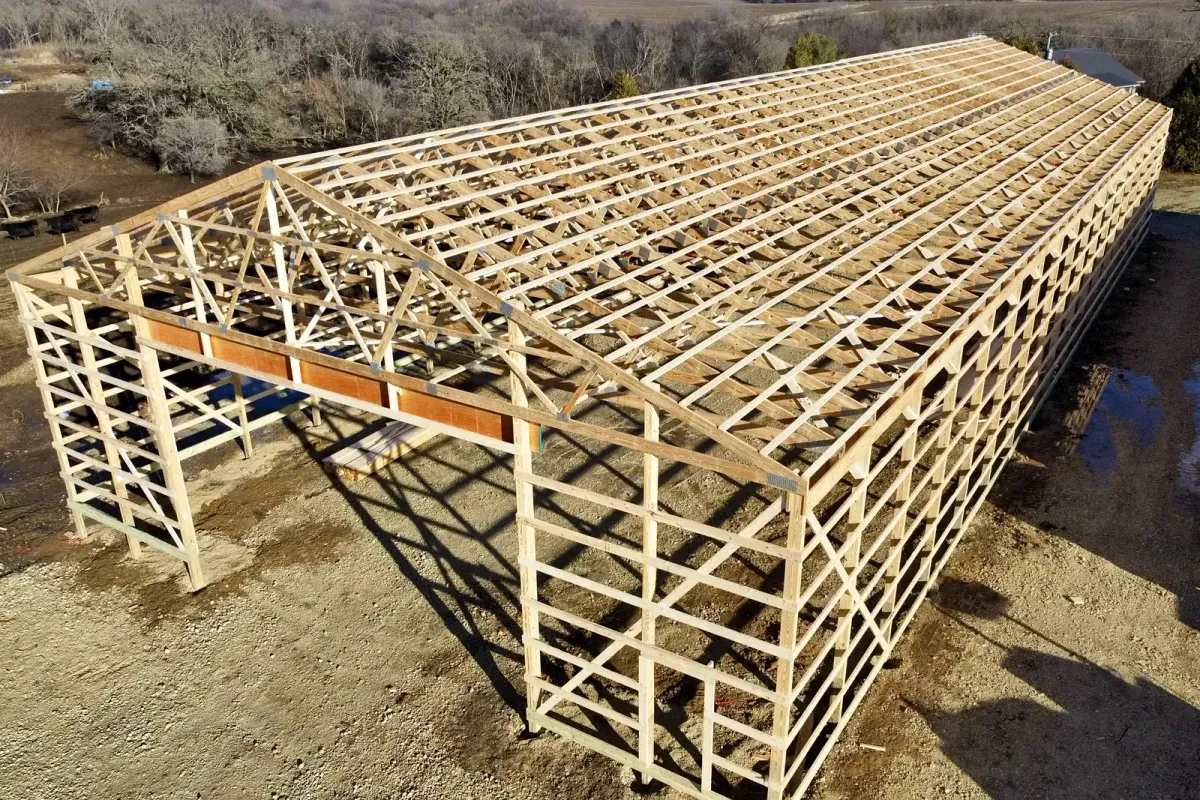
Each county page carries that county's own answer on permits, with the source and the date, the septic office, the floodplain administrator, and what the ground there does to a build.
How much does it cost?
Only a builder who has walked your lot can price it. One Central Texas builder's working range per finished square foot is on the cost page, dated and named as one builder's figure, with the drivers that move it.
What happens after I send the form?
Your request goes to one independent builder, not to a national lead list.
What gets built?
Turnkey barndominiums, post-frame homes, metal building homes and shop houses, owner-finished shells, and the lot evaluation and design work in front of them. The full list.
The data asset
One table, six counties, every source linked.
The building permit answer for each of the six counties, read at that county's own site with the date, plus the septic, floodplain and driveway offices and the number to call. The Central Texas barndominium permit directory.
Questions people ask
- Do I need a building permit to build a barndominium in Central Texas?
- It depends on the county and on whether the lot is inside a city. Texas leaves most residential building rules outside city limits to each county, and the six counties on this site answer differently. Each county page carries that county's own answer with the source and the date it was read. A septic permit applies on every lot without sewer, and inside any city limits the city's building department applies.
- Who builds my barndominium?
- Whoever you sign a contract with. This site does not build. Your request goes to one independent builder, named on the about page, and taking a project is their call. Texas does not require a state license to work as a general contractor, so the checks that matter are the written contract, the engineered plans, and the county permit record where the county keeps one.
- Is a septic permit different near the lakes?
- It can be. Around the Highland Lakes the Lower Colorado River Authority runs its own on-site sewage program inside a zone near the water, and outside that zone the county is the permitting authority. The septic guide explains how to find out which office holds your parcel.
- What does a barndominium cost around Austin and the Highland Lakes?
- Only the builder who walks your lot can price it. One Central Texas builder gave this site a working range per finished square foot, which the cost page shows with the date, and the rest depends on the site: septic, driveway, utilities, rock, the slab and the finish level.
- What happens after I send the form?
- Your request goes to one independent builder, not to a national lead list. You get their name before you send it, so you know exactly where your details land. Whether they take the project is up to them. There is no fee to you at any point.
- Which places does this site cover?
- Travis, Williamson, Burnet, Llano, Bastrop and Caldwell counties: Georgetown, Liberty Hill, Leander, Burnet, Marble Falls, Llano, Bastrop, Lockhart and the land between them. Each county has its own page.
- Do I need a building permit to build a barndominium in Llano County?
- Not a building permit. Llano County issues none and runs no building department, no building code and no building inspector. A new house there needs a county development permit, which is also how the property gets its 911 address, a septic permit from the county or from the Lower Colorado River Authority inside its water quality zone, and a floodplain development permit if any part of the lot is in a mapped special flood hazard area. Anything in the county right of way, driveways and culverts included, needs your precinct commissioner's written permission plus a road cut permit.
- Does my septic permit come from the county or from LCRA?
- It depends on where the lot sits. LCRA is a TCEQ authorized agent in Travis, Burnet and Llano counties, covering the restricted and water quality zones of Lakes Buchanan, Inks, LBJ, Marble Falls and Travis plus named cities and villages. It does not appear at all in Williamson, Bastrop or Caldwell, where the county program handles every system. Travis County has seven authorized agents in all and Burnet has eight, so the answer can change from one side of a road to the other. Check your address on LCRA's searchable OSSF and watershed jurisdiction map and confirm with TCEQ's county agent lookup before you assume which office you are dealing with.
- I have more than ten acres. Does the state septic exemption apply to me?
- Probably not here. The state exemption under 30 TAC 285.3 is narrow: a single family dwelling on ten acres or more, meeting all Subchapter D construction standards, causing no nuisance or groundwater pollution, with every part of the system at least 100 feet from the property line, all effluent disposed of on the property, and no second dwelling on the tract. Local programs are allowed to be stricter, and they are. Burnet, Bastrop and Caldwell counties each permit every system regardless of acreage, which sets the state exception aside. Travis County states no lot-size exemption at all, and inside LCRA's jurisdiction a permit is required no matter the lot size.
- Who approves the driveway onto my lot?
- It depends on the county and on who maintains the road. In Llano County nothing goes in the county right of way, driveways and culverts included, without your precinct commissioner's written permission plus a road cut permit. In Burnet County the precinct commissioner issues a county road access permit and sets culvert location, length and diameter at a site meeting, and that approval has to be in hand before a 911 address is assigned. Williamson County Road and Bridge issues the permit for a new or modified driveway onto a county-maintained road and sizes the culvert. Travis County TNR permits a driveway onto a county-maintained road and issues none at all onto an unmaintained or unaccepted road. Bastrop puts the driveway on the same county development application, and Caldwell County's Unit Road Department issues it even on a tract exempt from platting. On a Farm to Market, Ranch Road or State Highway it is TxDOT.
- What else does a Bastrop County lot have to clear?
- Two things the county record raises only for Bastrop. The first is a Lost Pines Habitat Conservation Plan decision where the tract is in the covered area. The Houston toad has been federally endangered since its listing on October 13, 1970, critical habitat was designated in portions of Bastrop and Burleson counties on January 31, 1978, and range-wide audio surveys from 2006 to 2011 detected the toad in only nine counties, Bastrop among them. The second is fire. The 2011 Bastrop County Complex fire covered 32,400 acres, burned for 37 days and destroyed 1,660 homes and 36 commercial buildings, with 75 percent of it burning at extreme fire intensity. Texas A&M Forest Service defines three home ignition zones by distance from the house, Immediate at 0 to 5 feet, Intermediate at 5 to 30 feet and Extended at 30 to 100 feet, and publishes statewide data in the Texas Wildfire Risk Assessment Portal.
- Does one house on a big lot need an Edwards Aquifer plan?
- In Travis or Williamson County, it depends on the zone and the lot. A single-family residence may not need its own plan if it sits in a master community with an approved plan, or on a lot larger than five acres with only that one residence, or keeps impervious cover to 20 percent or less of the legal property. Outside those conditions the recharge zone has no acreage floor: every regulated activity needs an approved Water Pollution Abatement Plan before construction. On the contributing zone the trigger is five acres of disturbance or being part of a larger plan of development or sale. Check the parcel on the TCEQ Edwards Aquifer Map Viewer, and allow up to 30 days of administrative review plus 90 days of technical review.
Free estimate
Ready to price a build on your lot?
Your request goes to one independent builder, not to a national lead list. Free. No obligation. No fee to you at any point.
Last reviewed 2026-09-13.